📞  — free, 24/7
 — free, 24/7| Package | Price per Dose | Price | |
|---|---|---|---|
| 90 tab | €27.54 | €3,541.45 €2,479.02 Free shipping | |
| 60 tab | €28.29 | €2,424.77 €1,697.34 Free shipping | |
| 30 tab | €29.78 | €1,276.18 €893.33 Free shipping | |
| 20 tab | €30.52 | €872.05 €610.44 Free shipping | |
| 10 tab | €31.27 | €446.65 €312.66 Free shipping | |
| 90 tab | €32.01 | €4,115.74 €2,881.02 Free shipping | |
| 60 tab | €32.76 | €2,807.63 €1,965.34 Free shipping | |
| 30 tab | €34.24 | €1,467.62 €1,027.33 Free shipping | |
| 20 tab | €34.99 | €999.67 €699.77 Free shipping | |
| 10 tab | €35.73 | €510.46 €357.32 Free shipping | |
| 90 tab | €34.99 | €4,498.61 €3,149.02 Free shipping | |
| 60 tab | €35.73 | €3,062.87 €2,144.01 Free shipping | |
| 30 tab | €37.22 | €1,595.24 €1,116.67 Free shipping | |
| 20 tab | €37.97 | €1,084.75 €759.33 Free shipping | |
| 10 tab | €38.71 | €553.00 €387.10 Free shipping |
Disclaimer: This information is for patients in Ireland and is not a substitute for professional medical advice. Consult a healthcare professional for personalised guidance.
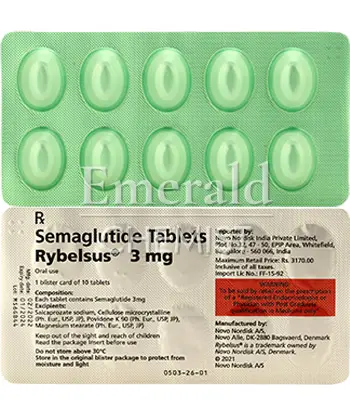
Rybelsus is an oral tablet containing the active ingredient semaglutide, a glucagon-like peptide-1 (GLP-1) receptor agonist, designed to improve glycemic control in adults with type 2 diabetes. The medication belongs to the GLP-1 receptor agonist class, which mimics the action of natural incretin hormones to help regulate blood sugar. Its primary therapeutic purpose is to lower elevated blood glucose levels when used as part of a comprehensive diabetes treatment plan, alongside diet and exercise.
The oral formulation is taken once daily and is intended for adults who require therapy beyond lifestyle modification or who have not achieved adequate control with other non-insulin antidiabetic medicines. In Ireland, treatment decisions are guided by national guidelines and clinical evaluation, with a prescription often required based on local rules. The medication name Rybelsus refers to the drug product, while semaglutide denotes the active substance.
The mechanism of action includes enhancing glucose-dependent insulin secretion, suppressing inappropriate glucagon release, and slowing gastric emptying, which can help reduce post-meal blood sugar spikes. The pharmacologic profile distinguishes it from some injectable GLP-1 receptor agonists by its oral route of administration. Check the official patient information leaflet for full details and contact a pharmacist if any point is unclear.
Rybelsus is indicated for adults with type 2 diabetes to improve glycemic control when lifestyle measures and prior medications do not provide sufficient control. It is often considered as part of a treatment strategy that may include metformin, other oral agents, or injectable therapies, depending on patient needs. The choice depends on factors such as kidney function, cardiovascular risk, and tolerability of side effects.
Clinical decision-making may include patient preference for an oral tablet versus an injectable therapy, potential adherence to a daily schedule, and the anticipated impact on cardiovascular risk factors. In cases where oral therapy is preferred or practical, Rybelsus offers an alternative to injectable GLP-1 receptor agonists. If a patient has a history of pancreatitis or certain thyroid conditions, the clinician may consider alternative options and closely monitor safety signals. Always follow the prescriber’s guidance and the official product information.
Physicians may choose Rybelsus when a patient requires a GLP-1–based approach but prefers an oral formulation. It may be used as part of a combination regimen with other non-insulin agents while monitoring for adverse effects. If glycemic targets remain unmet, a clinician may escalate therapy, substitute with another agent, or add another mechanism of action. Seek guidance from a doctor or pharmacist for individualized treatment planning.
Contraindications and cautions influence therapeutic choice; for example, a history suggesting pancreatitis or medullary thyroid carcinoma would steer treatment away from GLP-1 receptor agonists. In such cases, alternative classes or regimens are discussed with the prescriber. Any decision should be based on a complete clinical assessment and patient preferences, with ongoing monitoring for efficacy and safety.
The active compound semaglutide binds GLP-1 receptors, promoting glucose-dependent insulin release from pancreatic beta cells, suppressing glucagon secretion from alpha cells, and slowing gastric emptying. This combination helps lower blood glucose after meals and throughout the day. The mechanism is designed to reduce the risk of hypoglycemia compared with some other glucose-lowering therapies when meals are skipped or delayed, due to its glucose-dependent action.
Rybelsus differs from many injectable GLP-1 receptor agonists in its route of administration. The oral formulation requires gut absorption and a specific dosing strategy to optimize bioavailability, whereas injectables deliver the drug systemically. Absorption can be influenced by timing relative to meals and other oral medicines, and this can affect how quickly and how well blood glucose improves. Commentary from healthcare professionals emphasises adherence to timing instructions for best results.
In comparison with oral antidiabetic agents such as metformin or DPP-4 inhibitors, GLP-1 receptor agonists provide additional effects on weight and appetite in some patients, which can influence overall treatment outcomes. The speed of onset and magnitude of effect vary between medications in the same class and between classes, and patient response can differ accordingly. Check the patient information leaflet and discuss expectations with a clinician.
Across related therapies, differences exist in dosing frequency, administration route, and tolerability. While injectables are given via subcutaneous injections, the oral form offers convenient daily dosing for some individuals. Safety profiles and monitoring requirements may also vary among agents, underscoring the need for individualised choices guided by a healthcare professional.
The following comparison highlights general considerations for adults with type 2 diabetes when choosing among GLP-1 receptor agonists with differing administration routes and profiles. Individual suitability depends on clinical context and patient preference. The table provides a concise overview without implying superiority of any option.
Notes: Dosing and approvals vary by country and clinical indication. Always follow the local guidance and the product label. Consult a clinician for personalised advice before switching therapies.
| Name | |||
|---|---|---|---|
| Rybelsus (semaglutide, oral) | Glycemic control in adults with type 2 diabetes | Glycemic improvements observed over weeks to months with consistent use | Oral administration; convenient for patients preferring tablets over injections |
| Liraglutide (injectable GLP-1 receptor agonist) | Glycemic control and weight management in type 2 diabetes | Improvements typically seen over weeks to a few months | Well established efficacy; flexible weekly or daily dosing depending on product |
| Dulaglutide (injectable GLP-1 receptor agonist) | Glycemic control in adults with type 2 diabetes; cardiovascular risk reduction in some regimens | Glucose parameters improve over weeks to months | Weekly dosing may improve adherence for some patients |
Rybelsus is taken by mouth once daily. The tablet should be swallowed whole with a sip of plain water and not chewed, crushed, or broken. The medication is intended to be taken on an empty stomach with no food or drink other than water for at least 30 minutes after dosing.
Take Rybelsus at a consistent time each day to help establish routine and improve adherence. A maximum of 4 ounces (about 120 millilitres) of plain water should be consumed with the tablet. Do not take other medicines at the same time as Rybelsus if they are known to require separate dosing adjustments; if uncertain, consult a pharmacist.
If a dose is missed or if vomiting occurs after taking a dose, refer to the official leaflet or speak with a healthcare professional. Do not double the dose to make up for a missed dose without medical advice. Store tablets in their original container, protected from moisture, and at room temperature away from heat or humidity.
In Ireland, pharmaceutical care providers can assist with monitoring for efficacy and tolerability. Seek urgent medical help if there are signs of severe allergic reaction, pancreatitis, or other serious adverse effects. Always read the product information and contact a pharmacist if any uncertainty arises about when or how to take the medication.
Common adverse effects during initial treatment with GLP-1 receptor agonists, including Rybelsus, are typically gastrointestinal in nature. Nausea, vomiting, diarrhea, and decreased appetite may occur as the body adjusts to therapy. Most side effects lessen with continued use, but persistent symptoms warrant medical evaluation. A healthcare professional can assess whether treatment should continue or if a dose adjustment is appropriate.
Potential serious adverse events include pancreatitis, gallbladder problems, and possible thyroid-related issues. Any persistent severe abdominal pain, prolonged vomiting, or symptoms suggesting pancreatitis should prompt urgent medical review. Patients with a personal or family history of certain thyroid cancers should discuss risk with a clinician.
Contraindications to Rybelsus include known hypersensitivity to semaglutide or any formulation excipients, and certain medical histories that raise safety concerns. Special caution is advised in individuals with renal impairment, thyroid disease, or a history of diabetic retinopathy progression, as diabetes medications can influence microvascular complications. Always report new or worsening symptoms to a clinician and follow the official guidance on safety monitoring.
Notices about safety are provided in the patient information leaflet. If there is any uncertainty regarding side effects or interactions, consult a pharmacist or doctor for clarification. Seek urgent medical help if there are signs of serious allergic reaction or other life-threatening symptoms.
Rybelsus can interact with other medicines by altering the rate or extent of absorption of certain drugs due to changes in gastric emptying. To minimise potential interactions, separate the timing of other oral medications by a period advised by a clinician, unless otherwise directed. Some medicines may need dose adjustment or alternative scheduling when used with Rybelsus.
Concomitant use with insulin or sulfonylureas may increase the risk of hypoglycemia. Blood glucose and weight responses should be monitored when such combinations are used, with dose adjustments as guided by a healthcare professional. If prescribed other antidiabetic agents, it is essential to discuss how their use may be coordinated with Rybelsus to ensure safety and efficacy.
Concomitant use with medications that require precise absorption to achieve effectiveness, such as some antibiotics or oral contraceptives, may require careful timing. Check the official product information and consult a pharmacist if there is any doubt about how to schedule multiple medications. If any new medication is planned, inform the prescriber about Rybelsus use to review potential interactions.
In all cases, avoid changing the dosing schedule without professional advice. The reader should check with a healthcare professional before starting any new medication or stopping a current one, particularly when other medications are involved or when underlying health conditions exist.
Pregnancy: The safety of Rybelsus during pregnancy has not been established. If pregnancy is planned or suspected, consult a clinician promptly to discuss treatment options and risks. Lactation considerations require consultation with a healthcare professional, as data on drug excretion into breast milk are limited.
Children and adolescents: Use in people under 18 years of age has not been established for this formulation. Clinical decisions should be guided by a specialist and the patient’s clinical status. For individuals aged 65 years or older or with specific comorbidities, treatment plans should be tailored to the individual’s health profile and monitored accordingly.
Renal and hepatic impairment: Dose adjustments or monitoring strategies may be considered in patients with kidney or liver disease. The prescribing clinician may adapt therapy based on renal function, metabolic considerations, and overall tolerability. Routine safety checks should be carried out as part of ongoing care.
In all situations, consult a healthcare professional if there is any uncertainty about suitability, safety, or monitoring requirements. This information is not a substitute for professional assessment.
Switching between GLP-1 receptor agonists is sometimes considered when patients prefer an oral option or experience tolerability issues with injections. A clinician will assess current glycemic control, body weight, and any side effects to determine if a transition is appropriate. Adjustments and monitoring are essential during the switch, and it may require a reinitiation period with gradual changes.
Direct comparisons between medications in this class depend on individual response and tolerability. Some patients may prefer oral therapy, while others respond better to injectable agents. Efficacy and safety profiles differ and should be weighed by a clinician, taking into account cardiovascular risk, weight changes, and adverse effects.
In certain markets, generic availability may vary based on regulatory and patent status. If a generic version becomes available, it may be offered under a different name but with the same active mechanism. Consult a pharmacist to understand current options and any differences in formulation or excipients.
Metformin remains a foundational therapy for many patients with type 2 diabetes. GLP-1 receptor agonists, including Rybelsus, offer additional benefits such as weight loss and weight-related cardiovascular considerations for some individuals. The choice should reflect a patient’s clinical profile, tolerability, and goal outcomes, guided by a clinician.
Hypoglycemia risk with GLP-1 receptor agonists is generally lower when used alone, because the insulin-releasing effect is glucose-dependent. The risk increases if combined with other insulin secretagogues or insulin. Monitoring is advised when therapies are combined or when dietary intake changes.
Glycemic improvements may begin within weeks, with more substantial effects typically observed over several weeks to months of consistent use. Individual responses vary according to the dose, adherence, and concurrent therapies. Regular blood glucose monitoring provides the best information about progress.
If a dose is missed, follow the clinician’s guidance or the product label. Do not double up doses to compensate for a missed dose without consulting a healthcare professional. Maintaining a regular dosing schedule supports stable blood glucose control and predictable therapeutic effects.
Many medications can be used alongside Rybelsus, but timing and interactions may require adjustment. A clinician can review current prescriptions to optimise safety and efficacy. When initiating any new medication, inform the prescriber about Rybelsus to ensure coordinated care.
Official patient information leaflets accompany the medication and provide detailed guidance on dosing, storage, and safety. Pharmacists can supply tailored advice based on individual health status, current therapies, and local regulatory requirements. For verified information, consult a healthcare professional or a trusted pharmacology reference in Ireland.
Additional resources may include national diabetes guidelines and the product’s official documentation. Any questions about suitability, dosing, or changes to therapy should be discussed with a doctor or pharmacist. This information is designed to support discussions with healthcare professionals and to facilitate informed choices in collaboration with a clinical team.
In case of urgent concerns such as severe allergic reactions, persistent vomiting, severe abdominal pain, or signs of pancreatitis, seek immediate medical attention. Ongoing monitoring of blood glucose, weight, and overall health is recommended during antidiabetic therapy.
14–21 days. Free from €179.39 .
5–9 days. €26.91
−10% when paying with cryptocurrency.
−10% on all repeat orders.
All orders are packed in neutral, unbranded boxes with no product name on the outside.