📞  — free, 24/7
— free, 24/7 — free, 24/7| Package | Price per Dose | Price | |
|---|---|---|---|
| 360 pills | €0.72 | €368.25 €257.77 Free shipping | |
| 180 pills | €0.80 | €206.62 €144.63 | |
| 120 pills | €0.89 | €151.38 €105.96 | |
| 90 pills | €0.99 | €126.83 €88.78 | |
| 60 pills | €1.10 | €94.09 €65.86 | |
| 30 pills | €1.43 | €61.36 €42.95 | |
| 360 pills | €0.80 | €413.26 €289.28 Free shipping | |
| 180 pills | €0.89 | €229.12 €160.39 | |
| 120 pills | €1.00 | €171.84 €120.29 | |
| 90 pills | €1.12 | €143.19 €100.24 | |
| 60 pills | €1.30 | €112.51 €78.75 | |
| 30 pills | €1.52 | €65.45 €45.81 | |
| 360 pills | €1.12 | €574.89 €402.42 Free shipping | |
| 180 pills | €1.23 | €317.10 €221.97 Free shipping | |
| 120 pills | €1.37 | €235.26 €164.68 | |
| 90 pills | €1.49 | €192.30 €134.61 | |
| 60 pills | €1.62 | €139.10 €97.37 | |
| 30 pills | €1.83 | €77.72 €54.41 | |
| 10 pills | €2.19 | €30.67 €21.47 | |
| 360 pills | €1.86 | €957.47 €670.23 Free shipping | |
| 180 pills | €1.88 | €482.82 €337.97 Free shipping | |
| 120 pills | €1.96 | €335.51 €234.86 Free shipping | |
| 90 pills | €2.13 | €274.13 €191.89 Free shipping | |
| 60 pills | €2.39 | €204.57 €143.20 | |
| 30 pills | €2.82 | €120.69 €84.48 | |
| 10 pills | €3.82 | €55.22 €38.65 |
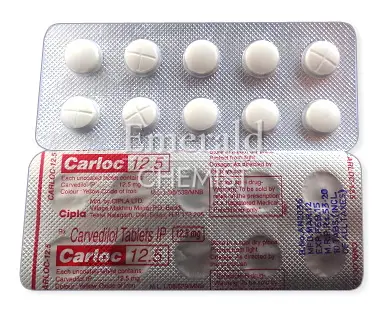
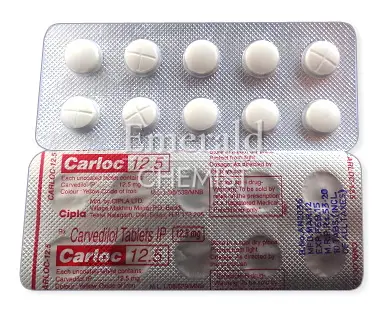
Carvedilol was developed in the 1990s and is now widely used to treat high blood pressure and heart failure. It blocks both beta receptors, which slow the heartbeat, and alpha-1 receptors, which widen blood vessels. This dual action helps lower blood pressure and eases the heart’s workload. It is prescribed around the world for several heart conditions and can help after a heart attack in some people.
Carvedilol is a medicine that belongs to the beta-blocker family, with extra alpha-1 blocking action. It calms the heart and opens blood vessels at the same time. This can slow your heart rate and reduce the pressure your heart must pump against.
In your body, carvedilol lowers blood pressure and reduces how hard your heart must work. It can also improve blood flow and symptoms like shortness of breath or chest discomfort in some people with heart conditions. The medicine comes as tablets or capsules that you take by mouth.
Most people take carvedilol with food to help the body absorb it better. Your doctor will decide the right dose and how often you should take it. Do not change your dose on your own and do not stop the medicine without talking to your clinician first.
The main uses are high blood pressure (hypertension) and heart failure. By lowering blood pressure and easing the heart’s workload, carvedilol helps protect the heart from further damage and can improve everyday activity for many people.
It is also used after a heart attack for some patients, to improve survival and reduce future heart problems. In some cases, carvedilol may be prescribed for chest pain related to coronary artery disease, especially when other treatments are not enough or when your doctor thinks the benefits outweigh the risks.
People with certain heart rhythm problems or other conditions may not be suitable for carvedilol. Your doctor will explain why carvedilol is right for you and how long you should stay on it. Regular check-ins help your clinician adjust the dose safely.
Do not take carvedilol if you have a severe allergy to it or to other beta-blockers. Signs of a serious allergic reaction include swelling of the face, lips, tongue, or throat, and trouble breathing. Seek urgent help if you notice these symptoms.
Carvedilol can worsen breathing problems in people with asthma or severe COPD. If you have wheezing or a history of breathing difficulties, tell your doctor before starting carvedilol. You may need a different treatment.
It should not be started if you have very slow heart rate, severe heart block without a pacemaker, or active heart failure that requires intravenous medicines. Signs include dizziness, fainting, or a very slow pulse.
People with liver disease or very poor liver function may need special consideration. In some cases, carvedilol is not recommended or you may require careful monitoring and dose adjustments. If you are pregnant or breastfeeding, discuss the risks and benefits with your clinician before taking carvedilol.
Do not stop carvedilol suddenly. Stopping abruptly can worsen chest pain or shift heart function. Your doctor will guide you on tapering the dose gradually if needed. If you have pheochromocytoma (a rare tumor), carvedilol is given with other medicines to block adrenaline effects; do not use carvedilol alone for this condition without close medical supervision.
Common effects include dizziness or lightheadedness, especially when you start the medicine or change the dose. You may also feel tired, have a slower heart rate, or experience low blood pressure. Some people notice nausea, diarrhea, or stomach upset.
Less common are swelling in the feet or ankles, cold hands or feet, or changes in sleep or mood. You might notice dry mouth or decreased sexual desire or ability. If you have diabetes, carvedilol can affect blood sugar readings or how you notice low blood sugar, so watch for symptoms and check your levels as advised by your doctor.
Rare but serious effects include signs of an allergic reaction, severe dizziness with fainting, severe slow heart rate, or trouble breathing. Severe liver problems are possible but uncommon. If you see yellowing of the skin or eyes, dark urine, persistent nausea, or abdominal pain, contact your clinician promptly.
Blood pressure medicines, antidepressants, and certain heart drugs can interact with carvedilol. Taking carvedilol with other medicines that lower blood pressure or slow the heart can cause your blood pressure to drop too much or your heart rate to become dangerously slow. Tell your doctor about all medicines you use, including herbs and over‑the‑counter products.
Calcium channel blockers such as verapamil or diltiazem, or other beta-blockers, can increase the risk of very slow heart rate or low blood pressure. If you take these together, your doctor will monitor you closely and may adjust doses.
Carvedilol can affect blood sugar control and may mask some symptoms of low blood sugar. If you use insulin or diabetes pills, monitor your glucose as directed. Inform your clinician if you have diabetes or frequent lows.
Some medicines affect carvedilol levels in your blood. For example, certain antidepressants that block CYP2D6 (like fluoxetine or paroxetine) can raise carvedilol levels. Medications that induce this enzyme may lower carvedilol levels. Always tell your doctor about all medicines you take so they can adjust as needed.
Alcohol can enhance some side effects like dizziness or low blood pressure. NSAIDs may reduce carvedilol’s blood pressure-lowering effect in some people. Do not change or stop any medicine without talking to your clinician first.
14–21 days. Free from €172.55 .
5–9 days. €25.88
−10% when paying with cryptocurrency.
−10% on all repeat orders.
All orders are packed in neutral, unbranded boxes with no product name on the outside.