📞  — free, 24/7
— free, 24/7 — free, 24/7| Package | Price per Dose | Price | |
|---|---|---|---|
| 360 pills | €0.92 | €440.62 €330.47 Free shipping | |
| 180 pills | €0.98 | €235.12 €176.34 | |
| 120 pills | €1.07 | €169.91 €127.44 | |
| 90 pills | €1.27 | €152.13 €114.10 | |
| 60 pills | €1.53 | €122.49 €91.87 | |
| 30 pills | €1.88 | €75.07 €56.30 | |
| 10 pills | €2.37 | €31.60 €23.70 | |
| 360 pills | €1.44 | €689.60 €517.20 Free shipping | |
| 180 pills | €1.48 | €355.66 €266.74 Free shipping | |
| 120 pills | €1.63 | €260.81 €195.61 Free shipping | |
| 90 pills | €1.79 | €215.36 €161.52 | |
| 60 pills | €2.15 | €171.89 €128.92 | |
| 30 pills | €2.37 | €94.83 €71.12 | |
| 10 pills | €2.67 | €35.55 €26.66 | |
| 180 pills | €1.78 | €426.79 €320.09 Free shipping | |
| 120 pills | €2.02 | €322.06 €241.55 Free shipping | |
| 90 pills | €2.28 | €274.64 €205.98 Free shipping | |
| 60 pills | €2.45 | €195.60 €146.70 | |
| 30 pills | €2.67 | €106.68 €80.01 | |
| 10 pills | €2.96 | €39.50 €29.62 |
Could Clomiphene help me get pregnant if I have irregular periods or trouble ovulating?
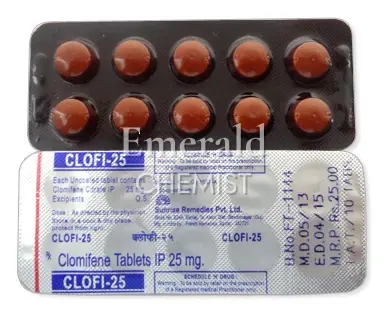
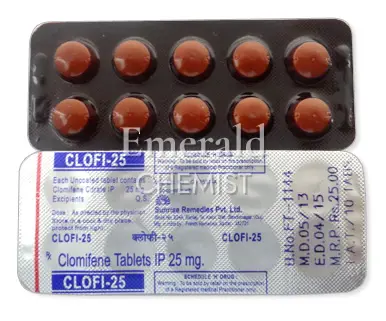
Clomiphene is a prescription medicine that can help some people start ovulation when their cycles are irregular. It is not a fertility hormone by itself, but it nudges your body to release an egg. This page explains what clomiphene is, what it treats, essential safety notes, possible side effects, and how other medicines may change how it works. If you have questions about your own situation, talk with your clinician or pharmacist.
Clomiphene citrate is a selective estrogen receptor modulator, or SERM. It works by changing how your brain reads your own estrogen levels. It mainly acts on the hypothalamus, a part of the brain that helps control your hormones.
By shifting this signal, your body releases more of the hormones FSH and LH. Those hormones tell the ovaries to mature an egg and to release it. Clomiphene is taken as tablets for a short, defined period during your cycle, exactly as your clinician prescribes.
Clomiphene is used to treat infertility caused by irregular or absent ovulation in women. It is commonly prescribed for people with polycystic ovary syndrome (PCOS) when monthly ovulation does not occur regularly. The goal is to promote one or more ovulations so conception is possible in the following cycle.
The medicine is prescribed by a clinician and used under medical supervision. In some cases, doctors may use clomiphene for other approved or off‑label purposes, including certain conditions in men. The exact treatment plan can vary based on your health history and the reason for treatment.
Do not take clomiphene if you are pregnant or plan to become pregnant while using it. It can harm a pregnancy and should be stopped if pregnancy occurs. You should also avoid clomiphene if you have liver disease, or if you have abnormal uterine bleeding or an ovarian cyst not due to PCOS. A known allergy to clomiphene or any ingredient in the tablet is a reason not to use it. Other contraindications include estrogen-dependent tumors, a history of blood clots, and certain breast or reproductive cancers. If you have any of these conditions, your clinician will consider safer options for you.
Clomiphene requires careful use and monitoring. It should be used under close supervision by a clinician who knows your full medical history. Precautions include watching for ovarian enlargement or signs of ovarian hyperstimulation (such as severe abdominal pain, swelling, or rapid weight gain). Visual disturbances, including blurred vision or flashing lights, may occur and should prompt contacting a clinician promptly. If you have liver disease, thyroid or adrenal problems, or a history of blood clots, tell your doctor before starting clomiphene. Your clinician may adjust your treatment, order tests, or suggest stopping the medicine if needed.
Many people tolerate clomiphene well, but side effects can occur. Very common effects (affecting more than about 1 in 10 people) include hot flashes, abdominal discomfort or bloating, nausea, vomiting, and breast tenderness. You may also notice changes in your menstrual flow during treatment. These effects often improve with time or after finishing the course.
Common but less frequent effects (about 1 in 10 to 1 in 100 people) include headaches, dizziness, mood changes or irritability, sleep problems, and mild skin changes like acne or rashes. Some people report breast swelling or tenderness that lasts beyond the treatment period. Visual disturbances, such as blurred vision or seeing spots, are less common but may require medical evaluation, especially if you notice them suddenly or persistently. If you develop severe abdominal pain, swelling, shortness of breath, or signs of an allergic reaction, seek urgent care.
Estrogen-containing medicines, including some birth control pills or therapies, may reduce how well clomiphene works. If you are taking estrogen therapy, or if you plan to use hormonal contraception during treatment, tell your clinician. They may adjust your plan to optimize chances of successful ovulation and pregnancy or suggest a different approach.
Clomiphene can interact with other fertility drugs. Using it together with medicines that stimulate the ovaries (like gonadotropins) can raise the risk of ovarian hyperstimulation and multiple pregnancies, so such combinations require careful monitoring in a clinic. Other medicines processed by the liver can affect clomiphene levels, and vice versa, so inform your clinician about all prescription drugs, over‑the‑counter medicines, vitamins, and herbal products you take. Alcohol use should be discussed with your clinician, as it can influence your overall health during therapy. Always share a complete list of substances you use to help prevent unwanted interactions.
14–21 days. Free from €178.55 .
5–9 days. €26.78
−10% when paying with cryptocurrency.
−10% on all repeat orders.
All orders are packed in neutral, unbranded boxes with no product name on the outside.