📞  — free, 24/7
 — free, 24/7| Package | Price per Dose | Price | |
|---|---|---|---|
| 180 pills | €2.08 | €535.99 €375.19 Free shipping | |
| 120 pills | €2.16 | €370.08 €259.05 Free shipping | |
| 90 pills | €2.17 | €278.62 €195.03 Free shipping | |
| 60 pills | €2.43 | €208.43 €145.90 | |
| 30 pills | €2.68 | €114.84 €80.39 | |
| 180 pills | €2.38 | €612.56 €428.79 Free shipping | |
| 120 pills | €2.53 | €433.89 €303.72 Free shipping | |
| 90 pills | €2.68 | €344.55 €241.19 Free shipping | |
| 60 pills | €2.83 | €242.46 €169.72 | |
| 30 pills | €3.28 | €140.36 €98.25 | |
| 180 pills | €2.71 | €697.64 €488.35 Free shipping | |
| 120 pills | €2.90 | €497.70 €348.39 Free shipping | |
| 90 pills | €3.04 | €391.35 €273.94 Free shipping | |
| 60 pills | €3.20 | €274.36 €192.05 Free shipping | |
| 30 pills | €3.47 | €148.87 €104.21 |
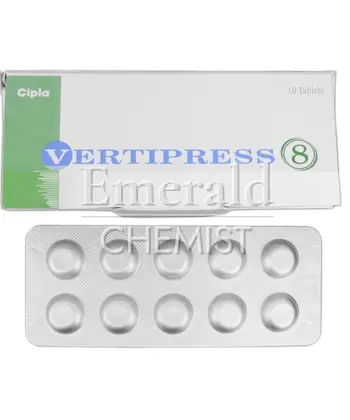
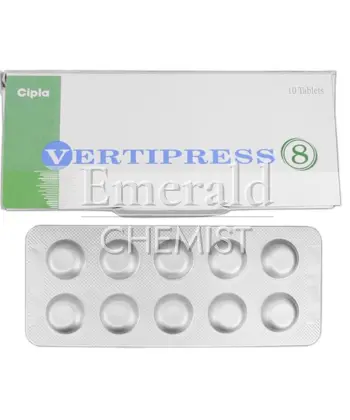
Can betahistine help my vertigo or Ménière’s disease?
Betahistine is a histamine analogue indicated for vertigo and balance disorders arising from inner-ear dysfunction. It is thought to improve inner-ear microcirculation and vestibular function, which may reduce the frequency and severity of vertigo episodes in some patients. The medicine is taken orally, typically as tablets, under medical supervision to determine the duration of therapy and monitor response.
Betahistine dihydrochloride is the active pharmaceutical ingredient. It is a structural analog of histamine with a profile that favors inner-ear action. The drug is used to address vertigo related to inner-ear disorders and is not a treatment for other types of dizziness.
Pharmacologic effects include enhancement of cochlear microcirculation and modulation of histaminergic pathways in the brainstem, supporting vestibular compensation. The product is supplied in oral tablet form and prescribed in varying doses depending on age and comorbidity.
Primary indication: vertigo associated with Ménière’s disease or Ménière-like syndromes. Patients may experience fewer vertigo attacks and reduced spinning sensations with ongoing therapy, alongside stabilization of hearing-related symptoms in some cases.
Secondary indications: other peripheral vestibular disorders with vertigo or imbalance, recurrent dizziness, or episodic vertigo of unclear origin. Efficacy in non-Ménière conditions is variable and depends on individual response and tolerance. Therapy is typically guided by clinical assessment and audiovestibular testing, with periodic reassessment.
Betahistine acts as a histamine H1 receptor agonist and as an antagonist at H3 receptors. This dual action promotes histaminergic activity and vasodilation in the inner ear, improving blood flow and reducing endolymphatic pressure in susceptible structures.
In the central nervous system, enhanced histaminergic transmission may support vestibular processing and compensation after acute vertigo events. Oral administration leads to systemic absorption with hepatic metabolism and renal excretion; dosing is adjusted for age and renal function as needed.
Common adverse effects include headache, nausea, upset stomach, and mild flushing. Dizziness, rash, or hypersensitivity reactions are uncommon but possible.
Contraindications include known hypersensitivity to betahistine. Use in pregnancy or lactation requires medical consultation. As with all medications, report persistent or severe symptoms and review potential drug interactions with a clinician or pharmacist.
14–21 days. Free from €179.39 .
5–9 days. €26.91
−10% when paying with cryptocurrency.
−10% on all repeat orders.
All orders are packed in neutral, unbranded boxes with no product name on the outside.