📞  — free, 24/7
— free, 24/7 — free, 24/7| Package | Price per Dose | Price | |
|---|---|---|---|
| 360 pills | €1.15 | €489.18 €415.80 Free shipping | |
| 180 pills | €1.26 | €266.34 €226.39 Free shipping | |
| 120 pills | €1.39 | €196.71 €167.20 | |
| 90 pills | €1.46 | €154.92 €131.69 | |
| 60 pills | €1.58 | €111.40 €94.69 | |
| 30 pills | €1.72 | €60.91 €51.78 | |
| 10 pills | €1.81 | €20.87 €17.74 | |
| 360 pills | €1.64 | €696.35 €591.89 Free shipping | |
| 240 pills | €1.70 | €480.47 €408.40 Free shipping | |
| 180 pills | €1.81 | €382.98 €325.54 Free shipping | |
| 120 pills | €1.98 | €280.27 €238.23 Free shipping | |
| 90 pills | €2.15 | €228.04 €193.84 Free shipping | |
| 60 pills | €2.28 | €160.15 €136.12 | |
| 30 pills | €2.46 | €87.03 €73.97 | |
| 10 pills | €2.68 | €31.32 €26.62 | |
| 180 pills | €2.44 | €517.03 €439.48 Free shipping | |
| 120 pills | €2.52 | €355.13 €301.86 Free shipping | |
| 90 pills | €2.63 | €278.53 €236.75 Free shipping | |
| 60 pills | €2.81 | €198.45 €168.68 | |
| 30 pills | €3.08 | €107.92 €91.73 | |
| 10 pills | €3.48 | €41.76 €35.50 |
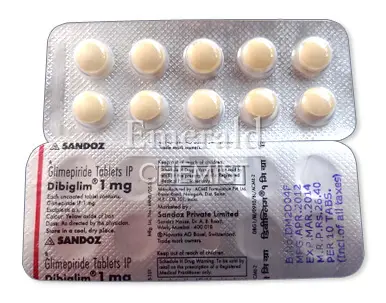
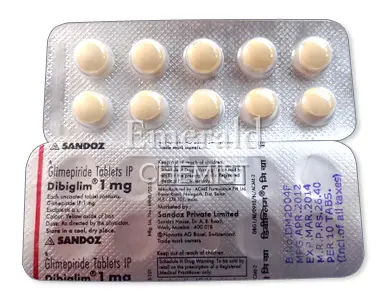
Glimepiride is a second-generation sulfonylurea antidiabetic agent. It stimulates insulin release from pancreatic beta cells by binding to sulfonylurea receptors and closing the ATP-sensitive potassium (KATP) channel, thereby lowering fasting and postprandial plasma glucose in adults with type 2 diabetes.
Pharmacologic class and mechanism underpin its use as an oral hypoglycemic. It is commonly prescribed as monotherapy or in combination with other antihyperglycemic drugs to achieve durable glycemic control while supporting diet and exercise. The agent requires functional beta-cell activity to elicit insulin secretion.
Compared with other sulfonylureas, glimepiride offers a relatively prolonged effect and a potentially lower risk of hypoglycemia in some patients, though risk remains dose dependent. It undergoes hepatic metabolism with cytochrome P450 2C9, producing active and inactive metabolites that contribute to its duration and variability among individuals.
Glipizide typically provides shorter duration of action and may be more responsive to meals, while glyburide (glibenclamide) carries a higher risk of prolonged hypoglycemia in renal impairment or older patients. These pharmacokinetic differences influence dosing, timing with meals, and the need for careful monitoring during therapy.
Indications include adults with type 2 diabetes mellitus who require additional glycemic control beyond lifestyle measures or who are not adequately controlled with metformin alone. Glimepiride may be used as monotherapy or in combination with metformin, pioglitazone, or insulin depending on clinical judgment and patient factors.
Dose initiation and titration should aim for target HbA1c while minimizing hypoglycemia. Renal or hepatic impairment, advanced age, and irregular meal patterns necessitate cautious use and slower dose adjustments. It is not indicated for type 1 diabetes or diabetic ketoacidosis.
Key differences from similar medications are summarized in the following comparison.
| Medication | Drug Class / Generation | Mechanism | Usual Use notes | Major Adverse Effects |
|---|---|---|---|---|
| Glimepiride | Second-generation sulfonylurea | Stimulation of insulin secretion via KATP channel closure | Monotherapy or combination therapy for type 2 diabetes | Hypoglycemia, weight gain |
| Glipizide | Second-generation sulfonylurea | Stimulation of insulin secretion; variable duration | Oral control with meals; flexible dosing | Hypoglycemia risk heightened with renal impairment |
| Glyburide (Glibenclamide) | Second-generation sulfonylurea | Insulin release stimulation; longer acting | Not preferred with renal impairment; cautious use in older adults | Prolonged hypoglycemia risk |
When selecting an agent, clinicians consider hepatic and renal function, meal patterns, and the patient’s risk profile for hypoglycemia.
Safety considerations center on hypoglycemia, weight gain, and interactions with alcohol or drugs that impair glucose production or counter-regulate sympathetic responses. Regular monitoring of blood glucose, renal function, and hepatic function is advised during ongoing therapy.
Common contraindications include type 1 diabetes and diabetic ketoacidosis. Use in pregnancy or lactation requires careful evaluation, with insulin often preferred when clinically indicated. Patients should be educated on recognizing hypoglycemia and promptly managing mild episodes.
14–21 days. Free from €178.29 .
5–9 days. €26.74
−10% when paying with cryptocurrency.
−10% on all repeat orders.
All orders are packed in neutral, unbranded boxes with no product name on the outside.