📞  — free, 24/7
— free, 24/7 — free, 24/7| Package | Price per Dose | Price | |
|---|---|---|---|
| 360 pills | €0.70 | €278.23 €250.41 Free shipping | |
| 270 pills | €0.74 | €222.25 €200.03 Free shipping | |
| 180 pills | €0.84 | €169.57 €152.61 | |
| 120 pills | €0.95 | €126.76 €114.08 | |
| 90 pills | €1.01 | €100.42 €90.38 | |
| 60 pills | €1.11 | €74.07 €66.67 | |
| 30 pills | €1.24 | €41.14 €37.03 | |
| 360 pills | €0.74 | €296.35 €266.71 Free shipping | |
| 270 pills | €0.79 | €235.43 €211.88 Free shipping | |
| 180 pills | €0.86 | €171.21 €154.09 | |
| 120 pills | €0.96 | €128.41 €115.57 | |
| 90 pills | €1.07 | €107.00 €96.30 | |
| 60 pills | €1.16 | €77.37 €69.63 | |
| 30 pills | €1.32 | €44.44 €39.99 | |
| 360 pills | €0.96 | €385.25 €346.73 Free shipping | |
| 270 pills | €1.01 | €302.93 €272.64 Free shipping | |
| 180 pills | €1.10 | €218.96 €197.07 Free shipping | |
| 120 pills | €1.22 | €161.34 €145.20 | |
| 90 pills | €1.29 | €128.41 €115.57 | |
| 60 pills | €1.44 | €95.48 €85.93 | |
| 30 pills | €1.57 | €52.67 €47.40 |
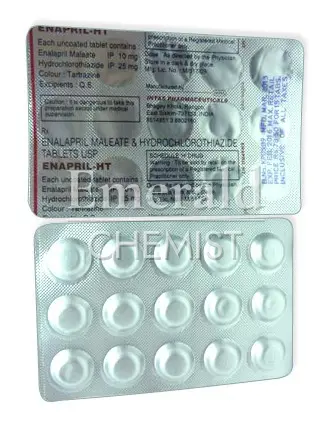
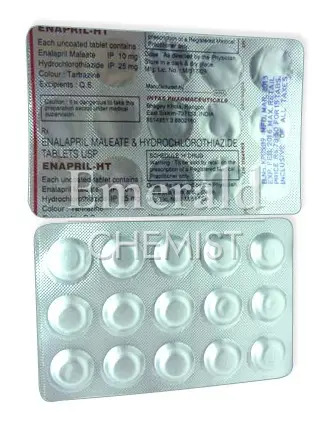
Enalapril, an ACE inhibitor introduced in the late 1980s, helped redefine cardiovascular risk management by reducing afterload and improving survival in systolic heart failure. It is a prodrug converted in the liver to enalaprilat, which suppresses angiotensin II formation and aldosterone secretion, producing vasodilation and natriuresis with favorable hemodynamic effects.
Enalapril is an oral angiotensin-converting enzyme inhibitor indicated for hypertension and cardiovascular disorders. It is a prodrug activated to enalaprilat, the active ACE-inhibitory metabolite, which reduces angiotensin II–mediated vasoconstriction and aldosterone-driven sodium retention.
Pharmacology and pharmacokinetics: after oral dosing, enalapril is absorbed and de-esterified in the liver to enalaprilat, exerting the therapeutic effect. The active metabolite is cleared primarily by the kidneys, and dose adjustments are common in renal impairment or advancing age. The half-life supports once- or twice-daily regimens depending on indication.
Indications include essential hypertension, where persistent BP reduction lowers stroke and coronary events. Enalapril is also indicated for symptomatic heart failure with reduced ejection fraction, where it improves survival, functional status, and hospitalization rates.
In patients after acute myocardial infarction with left ventricular dysfunction, enalapril has demonstrated mortality benefits when started early and titrated carefully. In selected individuals, it may slow progression of diabetic nephropathy by reducing intraglomerular pressure and proteinuria, with renal function and electrolyte monitoring.
Administration and dosing: tablets are taken by mouth, with or without food. For hypertension, a common starting dose is 5 mg once daily, with adjustments at 1– to 2-week intervals toward a target range up to 40 mg daily, given in single or divided doses.
For heart failure or LV dysfunction after MI, initiation often begins at 2.5 mg once daily, titrating cautiously to 10–20 mg daily or higher as tolerated, with attention to blood pressure, renal function, and concomitant diuretics.
Missed doses: take as soon as remembered unless the next dose is imminent; do not double the dose. If several doses are missed or if hypotension occurs, consult a clinician for dosing guidance.
Storage and stability: store at room temperature, away from moisture and heat; keep tablets in the original container and protect from light. Check the expiration date before use and discard any tablets that are broken or discolored.
Common adverse effects include dizziness on initiation, fatigue, and a persistent dry cough in some patients.
Serious but rare effects include angioedema, hyperkalemia, and renal function changes; risk is higher with older age, preexisting renal impairment, or concurrent NSAIDs or potassium-sparing medications.
Pregnancy: Enalapril is contraindicated in pregnancy; discontinue if pregnancy occurs. Women planning pregnancy should discuss alternatives with their clinician.
Consult a clinician for signs of angioedema, kidney problems, or electrolyte disturbances, and ensure regular monitoring of blood pressure, renal function, and electrolytes during initiation and titration, especially when used with diuretics or NSAIDs.
14–21 days. Free from €178.53 .
5–9 days. €26.78
−10% when paying with cryptocurrency.
−10% on all repeat orders.
All orders are packed in neutral, unbranded boxes with no product name on the outside.