📞  — free, 24/7
 — free, 24/7| Package | Price per Dose | Price | |
|---|---|---|---|
| 360 pills | €0.83 | €372.21 €297.77 Free shipping | |
| 180 pills | €1.10 | €247.51 €198.01 Free shipping | |
| 120 pills | €1.24 | €186.09 €148.88 | |
| 90 pills | €1.40 | €158.18 €126.54 | |
| 60 pills | €1.59 | €119.09 €95.28 | |
| 30 pills | €1.83 | €68.84 €55.07 | |
| 180 pills | €1.61 | €362.90 €290.32 Free shipping | |
| 120 pills | €1.85 | €277.29 €221.83 Free shipping | |
| 90 pills | €2.04 | €228.92 €183.14 Free shipping | |
| 60 pills | €2.28 | €171.21 €136.96 | |
| 30 pills | €2.58 | €96.76 €77.41 | |
| 180 pills | €1.91 | €428.04 €342.43 Free shipping | |
| 120 pills | €2.13 | €320.10 €256.08 Free shipping | |
| 90 pills | €2.41 | €271.71 €217.37 Free shipping | |
| 60 pills | €2.68 | €200.98 €160.79 | |
| 30 pills | €3.02 | €113.51 €90.81 |
Disclaimer: This information is intended to support discussions with a healthcare professional. It does not replace personalized medical advice. In Ireland, local rules may apply to access and prescription status for medrol active.
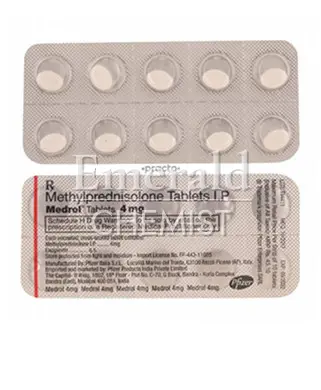
Methlyprednisolone is the active ingredient in medrol active. It belongs to the drug class known as corticosteroids, specifically glucocorticoids, which modulate the body's inflammatory and immune responses.
The formulation is designed to deliver systemic anti-inflammatory effects when prescribed, to control immune-related activity in various conditions. It is not a cure but an aid to reduce disease activity and improve symptoms.
The product may be prescribed for short or longer courses depending on the condition and response. In Ireland, access to medrol active may require a prescription or pharmacist oversight under local regulations.
The accompanying information leaflet provides product-specific details, including the exact formulation, package size, and storage instructions. Consult a pharmacist for clarification about this medicine’s use in individual circumstances.
Medrol active is used to treat a range of inflammatory and autoimmune conditions by dampening excessive immune activity. Symptoms often involve redness, swelling, pain, and impaired function in affected areas such as joints, skin, and airways.
Typical indications include flare-ups of inflammatory arthritis, severe allergic reactions, and certain skin diseases, as well as autoimmune disorders that affect multiple organs. The medicine may also be employed in acute situations to reduce swelling and immune activity rapidly.
Therapy is tailored to the condition’s severity and progression, with adjustments made under professional supervision. A clinician determines whether medrol active is appropriate for a specific diagnosis and stage of illness.
The information provided here is not exhaustive; consult the official leaflet or a healthcare professional for a complete list of approved indications in Ireland and for condition-specific guidance. If there is any doubt, seek advice from a pharmacist or doctor.
Methylprednisolone binds to glucocorticoid receptors inside cells, initiating changes in gene expression that regulate inflammation and immune activity. This action reduces the production of inflammatory mediators and the activity of immune cells at sites of disease.
The result is diminished inflammation, less tissue damage from immune processes, and decreased swelling. Normal functioning can improve as symptoms such as pain and stiffness lessen.
Effects may include stabilization of blood vessels and reduced capillary leak, contributing to symptom relief in affected tissues. The speed of benefit depends on the condition, the route of administration, and individual response.
Overall, medrol active acts to rebalance immune and inflammatory processes, providing a bridge to other therapies or helping to control acute episodes. The precise mechanism and expected outcomes are best explained by a clinician in the context of the specified condition.
Administration should follow a clinician’s instructions. The exact dose, duration, and tapering schedule are determined by the diagnosis, severity, and response to therapy.
Tablets are swallowed with water; timing is often planned in the morning to align with natural hormonal rhythms, and taking with meals can help reduce stomach upset. Do not crush or open modified-release formulations unless expressly advised by a healthcare professional.
Storage is typically at room temperature, away from light and moisture; keep the medication out of reach of children. If a dose is missed, the patient should consult the leaflet or contact a pharmacist or clinician for guidance before taking a replacement dose.
In Ireland, consult a pharmacist or doctor if adherence questions arise or if access to a clinician is limited. Do not alter treatment without professional advice, even if symptoms improve.
Medicines of this type should not be used by individuals with a known allergy to methylprednisolone or any component of medrol active. An immediate clinician consultation is advised if an allergic reaction occurs.
A systemic fungal infection is a contraindication, because corticosteroids can suppress immune defenses against such infections. Additional contraindications may apply based on overall health and concurrent therapies.
Live vaccines are generally avoided during systemic corticosteroid therapy due to potential immune suppression. A clinician should review vaccination plans during treatment.
Other conditions requiring caution include active untreated infections, severe uncontrolled illnesses, or certain heart, liver, or kidney problems. A healthcare professional should assess risk before starting treatment in these situations.
The use of corticosteroids carries potential adverse effects, particularly with longer treatment courses. Risks should be weighed against the expected therapeutic benefits by a clinician.
Long-term use can affect bone health, glucose control, mood, and infection risk. Regular monitoring by a healthcare professional is advised to minimize harm and adjust therapy as needed.
Caution is advised in patients with peptic ulcers, liver disease, cataracts, or glaucoma, as these conditions may be influenced by corticosteroid therapy. Pregnancy and breastfeeding require professional risk assessment and guidance.
Any signs of infection, unusual bruising, or vision changes necessitate prompt reporting to a clinician. Sudden cessation of therapy without medical guidance is discouraged due to possible withdrawal effects and symptom recurrence.
Common effects may include stomach upset, increased appetite, weight gain, and fluid retention. These symptoms are frequently mild and may lessen over time or with medical adjustments.
Mood changes, sleep disturbances, or anxiety can occur, particularly with higher doses or rapid changes in therapy. These effects should be discussed with a clinician if they become troublesome.
Serious but less common effects include elevated blood sugar, high blood pressure, thinning skin, and bone loss with longer use. Any persistent or severe adverse effects require medical evaluation.
Severe allergic reactions, signs of infection, vision changes, or other persistent symptoms should be reported immediately to a healthcare professional. Seek urgent medical help if a severe reaction is suspected.
Interactions with other medicines, foods, or supplements may alter effects or increase side-effect risk. A complete medication list should be shared with a pharmacist or clinician.
NSAIDs can increase the risk of stomach irritation or ulcers when used with corticosteroids; co‑use should be monitored and protective strategies discussed with a clinician.
Vaccines, particularly live vaccines, may have reduced effectiveness or safety during systemic corticosteroid therapy; vaccination plans should be reviewed with a clinician prior to administration.
Medicines that affect blood sugar or blood pressure, as well as other systemic steroids or immunosuppressants, may require monitoring and possible dose adjustments during treatment.
The safety of methylprednisolone during pregnancy depends on the balance of maternal benefit and potential fetal risk. Treatment decisions should be made with careful medical evaluation.
Breastfeeding during therapy is possible if benefits outweigh potential information regarding infant exposure; any transfer into breast milk should be considered in planning care.
Pregnant individuals or those planning pregnancy should not alter doses without medical guidance. If pregnancy occurs during therapy, prompt consultation with a clinician is advised.
All medication use in pregnancy or breastfeeding should be discussed with obstetric or primary care providers to ensure safety for both mother and child. Individual risk assessments are essential.
Some improvements may be noticed within a few days, but responses vary by condition and dose. If there is no improvement or symptoms worsen, contact a healthcare professional promptly.
If a dose is missed, it should be taken as soon as remembered unless the next dose is due soon; do not double up to compensate for a missed dose. If there is uncertainty, contact a pharmacist or clinician for guidance.
Taking medrol active with meals can help reduce stomach upset. There are no universal dietary restrictions, but interactions with certain foods or supplements may exist; seek guidance from a clinician or pharmacist.
Duration is determined by the condition and response, and may range from short courses to longer-term plans with monitoring. A tapering strategy may be employed if the course is extended or stopped after a period of therapy.
Seek medical advice if severe side effects occur, signs of infection emerge, or there is no improvement. Prompt contact is advised for any concerning symptoms or suspected complications.
Long-term use carries higher risks and requires regular monitoring, dose adjustments, and periodic review. Decisions regarding continued therapy should be made in collaboration with a clinician.
Pregnancy and breastfeeding involve potential risks and benefits; medical advice is essential before continuing therapy in these contexts. A clinician will weigh maternal benefit against fetal or infant risk.
Corticosteroids can mask infection signs and may require prompt evaluation. Seek medical advice if fever, chills, or other infection signs develop during treatment.
Official patient information leaflets accompany the medicine and provide product-specific details, including indications, contraindications, and safety instructions. These leaflets should be read in conjunction with professional advice.
Consult a pharmacist or doctor for explanations about indications, dosing, and safety related to individual health circumstances. Local regulations in Ireland may affect access, prescription status, and pharmacy availability.
For questions about interactions, adverse effects, or monitoring requirements, refer to the leaflet and seek guidance from a healthcare professional. Ongoing contact with a GP, pharmacist, or specialist is advised for complex conditions.
In case of uncertain information or changes in health status, check with a healthcare professional and consider obtaining a new prescription or updated guidance as needed. The official leaflet and the pharmacy team are appropriate sources for tailored advice.
14–21 days. Free from €179.39 .
5–9 days. €26.91
−10% when paying with cryptocurrency.
−10% on all repeat orders.
All orders are packed in neutral, unbranded boxes with no product name on the outside.