📞  — free, 24/7
— free, 24/7 — free, 24/7| Package | Price per Dose | Price | |
|---|---|---|---|
| 360 pills | €0.74 | €313.47 €266.45 Free shipping | |
| 180 pills | €0.81 | €172.40 €146.54 | |
| 120 pills | €0.92 | €128.86 €109.53 | |
| 90 pills | €0.98 | €102.74 €87.33 | |
| 60 pills | €1.05 | €74.87 €63.64 | |
| 30 pills | €1.14 | €40.04 €34.03 | |
| 360 pills | €0.89 | €376.16 €319.74 Free shipping | |
| 180 pills | €0.96 | €203.75 €173.19 | |
| 120 pills | €1.04 | €146.28 €124.33 | |
| 90 pills | €1.13 | €118.41 €100.65 | |
| 60 pills | €1.26 | €88.80 €75.48 | |
| 30 pills | €1.45 | €50.49 €42.92 | |
| 360 pills | €0.99 | €419.70 €356.75 Free shipping | |
| 180 pills | €1.17 | €247.29 €210.19 Free shipping | |
| 120 pills | €1.33 | €188.07 €159.86 | |
| 90 pills | €1.48 | €156.72 €133.22 | |
| 60 pills | €1.50 | €106.22 €90.29 | |
| 30 pills | €1.58 | €55.71 €47.36 | |
| 20 pills | €1.67 | €40.04 €34.03 | |
| 10 pills | €1.69 | €19.14 €16.27 |
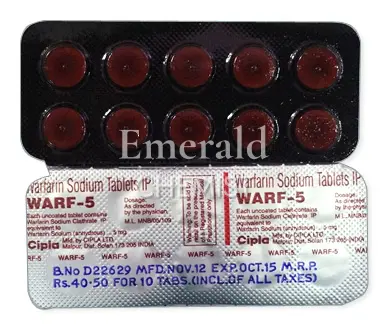
Coumadin (warfarin) is an oral anticoagulant used to prevent and treat blood clots. Warfarin belongs to the vitamin K antagonists (VKAs) drug class and acts by reducing the synthesis of vitamin K–dependent clotting factors in the liver. The primary therapeutic purpose is to lower the risk of clot formation in situations where clots can cause stroke, pulmonary embolism, or other serious complications.
Warfarin is prescribed to people with certain heart rhythm problems, prior venous thromboembolism, or mechanical heart valves, as part of a long‑term strategy to reduce clotting risk. The medicine is usually taken every day and requires regular monitoring to ensure the level of anticoagulation remains within a safe range.
The frequency and duration of treatment are determined by the treating clinician and depend on the underlying condition and the patient’s overall health. In Ireland, care is often coordinated through general practice or anticoagulation clinics, with INR testing guiding dose adjustments. Routine follow‑up is essential to maintain safe and effective anticoagulation.
Users should understand that the effect of warfarin is not immediate; the full therapeutic effect develops over several days and requires careful dose adjustments based on laboratory results. Abrupt changes in dosage or stopping the medicine without medical advice can increase the risk of harmful clots or bleeding.
Plainly, warfarin is a long‑term therapy for clot prevention or treatment, not a cure. It is part of an overall plan that may include imaging studies, lifestyle modifications, and other medications as determined by the clinician. Any questions about the intended use should be discussed with a pharmacist or physician.
Warfarin exerts its effect by inhibiting the enzyme vitamin K epoxide reductase, which is necessary for activating several clotting factors (II, VII, IX, and X) in the liver. By reducing the production of these factors, the blood’s ability to form clots is diminished. This mechanism is the basis for its anticoagulant action.
Pharmacologically, the drug interferes with the vitamin K cycle, leading to lower levels of active clotting factors. The result is a prolongation of clotting times measured in laboratory tests. The degree of anticoagulation is monitored using the international normalised ratio (INR), which reflects how long blood takes to clot compared with normal values.
In practical terms, the effect of warfarin depends on several variables, including liver function, dietary vitamin K intake, and interactions with other medicines. Dose adjustments are made to keep the INR within a target range appropriate for the individual’s medical condition. Clinicians weigh the benefits of preventing clots against the risk of bleeding when making changes to therapy.
Because warfarin interacts with many substances, both prescription medicines and certain foods or supplements can alter its effect. The prescription plan may include a schedule for regular blood tests and careful monitoring during any change in therapy. The aim is to maintain stable anticoagulation while minimizing adverse effects.
From a pharmacological perspective, warfarin is retained in hepatic tissue and metabolised by the cytochrome P450 enzyme system. Variability in metabolism among individuals explains differences in how quickly the drug reaches therapeutic levels and how long its effects persist after a dose change or discontinuation. This reinforces the need for supervised care and laboratory monitoring during therapy.
Warfarin is prescribed to reduce the risk of stroke and systemic embolism in selected patients with atrial fibrillation or flutter. This indication focuses on preventing clot formation that can travel to the brain or other organs. The aim is to lower the chance of an ischemic event while balancing bleeding risk.
Warfarin is also used to treat confirmed venous thromboembolism, including deep vein thrombosis (DVT) and pulmonary embolism (PE). It is employed to prevent recurrence in patients with a history of clotting events. The decision to initiate therapy takes into account the balance between preventing relapse and avoiding bleeding complications.
Another established indication is the prevention of thromboembolism in patients with mechanical heart valves. In Ireland, anticoagulation management for valve patients is often coordinated by cardiology services or specialised clinics, with careful INR monitoring and adjustments as valve position and prosthesis type may influence the target range.
In clinical practice, other conditions with a high clotting risk may also be treated with warfarin under specialist supervision. The drug may be used as part of a broader treatment plan that includes imaging, risk assessment, and management of comorbidities. Decisions are tailored to the individual patient’s needs and preferences, in consultation with healthcare professionals.
Patients should be aware that individual indications and target INR ranges are determined by the treating clinician. Check the official patient information leaflet or consult a pharmacist or doctor for the specific indications applicable to any given case in Ireland. The use of warfarin may vary by clinical setting and patient characteristics.
In some clinical situations, warfarin may be used off‑label under specialist supervision where alternative therapies are not suitable or have not been shown to be effective. Off‑label use is guided by individual risk assessments and the clinician’s judgement. This page presents general information and should not replace professional medical advice.
Examples of off‑label circumstances may include bridging therapy around surgical procedures or transitions when a patient is changing from one anticoagulant to another. When practised, bridging strategies are undertaken to minimise clot risk while addressing bleeding risk, and require careful monitoring and clear protocols.
Off‑label decisions should be documented and discussed with the patient. If a clinician considers an off‑label approach, information about benefits, risks, and alternative options is typically provided. Patients are encouraged to ask questions about the rationale and monitoring plan involved in any off‑label use.
In all cases, the risks and benefits of off‑label anticoagulation are weighed by the treating team. The patient’s other health conditions, medications, and dietary patterns are integral to these assessments. If there is any uncertainty, the official leaflet or a healthcare professional should be consulted for clarification.
Long‑term anticoagulation for unusual conditions remains a matter of clinical judgement. Decisions are made with attention to local policies, available monitoring resources, and patient preferences, and may evolve with new evidence and guidelines. Regular follow‑up is essential to ensure continued safety and effectiveness.
Warfarin dosing is individualized and adjusted based on laboratory measurements of the INR. The initial dose is determined by clinical judgment, with rapid adjustments made as INR results become available. Regular testing supports maintaining an appropriate therapeutic range while minimizing bleeding risk.
INR monitoring is typically more frequent at the start of therapy or after any dose change. Common practice involves follow‑up testing within days of initiation or dose modification, then at intervals determined by stability and the underlying condition. A plan for ongoing testing is usually established at treatment initiation and reviewed regularly.
Target INR ranges depend on the indication and patient characteristics. The clinician determines the appropriate range and communicates any necessary adjustments. If changes in health status, new medications, or dietary patterns occur, INR targets and dosing may need revision to preserve safety and effectiveness.
To support safe use, any missed or extra doses should be discussed with a pharmacist or clinician. In case of missed doses, instructions may vary depending on the timing within the dosing schedule and the latest INR result. Do not double up doses without professional guidance to avoid bleeding or clotting risks.
Warfarin is not suitable for everyone. In the presence of active major bleeding, known intolerance to warfarin, significant liver disease with impaired clotting factor production, or certain drug interactions, therapy may be contraindicated. A clinician will assess safety before initiating treatment or continuing it.
Major adverse effects of warfarin include an increased risk of bleeding, which can manifest as easy bruising, prolonged bleeding from cuts, nosebleeds, or unusual vaginal bleeding. Severe or uncontrolled bleeding requires urgent medical attention. The likelihood of bleeding is influenced by liver function, kidney function, and concomitant medications.
Pregnancy is a critical consideration with warfarin. Warfarin can be teratogenic (harmful to the developing fetus) and is generally avoided during pregnancy unless directed by a specialist in exceptional circumstances. If pregnancy is contemplated or confirmed, clinicians may propose alternative anticoagulants or modified treatment plans, depending on circumstances and available options.
Drug interactions are common with warfarin. Many prescription medicines, over‑the‑counter drugs, and herbal or vitamin supplements can increase or decrease the anticoagulant effect. Any new medication or supplement should be discussed with a pharmacist or physician before use. The goal is to prevent adverse interactions that could raise bleeding risk or reduce anticoagulation effectiveness.
It is important to seek medical advice promptly if any signs of serious bleeding occur, such as unusual but persistent nosebleeds, blood in urine or stool, or giddiness accompanied by pale skin. In the event of a significant bleed, urgent medical help should be sought. Do not ignore symptoms that raise concern about bleeding.
The intake of vitamin K–rich foods can influence warfarin’s effect. A consistent pattern of dietary vitamin K is preferable, rather than drastic, rapid changes in consumption. Patients should aim to maintain regular portions of foods containing vitamin K to support stable anticoagulation.
Common dietary sources of vitamin K include leafy green vegetables, certain oils, and some herbs. While it is acceptable to consume these foods, abrupt increases or decreases in intake can alter INR and necessitate dose adjustments. A healthcare professional can provide personalised guidance on diet while on warfarin.
Alcohol and caffeine may interact with warfarin in ways that influence bleeding risk or INR. Moderation and consistency are advised, and any planned changes to alcohol consumption should be discussed with a clinician. Smoking can also affect how the body processes warfarin and should be discussed within a broader health plan.
Herbal supplements and certain alternative therapies may interact with warfarin. Examples include, but are not limited to, preparations used to support cardiovascular health or hormonal balance. Before starting any supplement or alternative therapy, it is essential to consult with a pharmacist or physician to review potential interactions.
Warfarin is typically taken once daily by mouth. Consistency in the timing of each dose supports stable anticoagulation. If a dose is missed, instructions should be obtained from a pharmacist or clinician promptly, as the appropriate action depends on timing and INR status.
The medicine should be stored at room temperature, away from heat and moisture, and kept out of reach of children. Do not share medication and use a dedicated container or pill bottle when possible. If any packaging changes, or if doses are accidentally discarded or expired, please consult a pharmacist for guidance.
First line monitoring plans, including scheduled blood tests, will be explained by the prescribing clinician. Patients should attend all recommended appointments and bring a list of current medications, including over‑the‑counter drugs and supplements. This supports safer and more effective therapy.
During travel or extended absence from usual care, arrangements for INR testing and medication supply should be discussed with a pharmacist or clinician to prevent interruption of therapy. Clear plans help to sustain continuous anticoagulation while away from usual care settings.
Before any dental work or surgical procedure, it is important to inform the clinician that warfarin is being taken. In some situations, temporary adjustments to the warfarin regimen or bridging strategies may be recommended to reduce bleeding risk while maintaining protection against clots. Decisions are made on an individual basis.
For minor procedures or dental care, some clinicians may coordinate with the patient’s anticoagulation plan to optimise safety. The goal is to balance clot prevention with minimizing bleeding during and after the procedure. Do not alter the warfarin regimen without medical advice.
In cases of planned surgery, hospital teams may provide specific instructions, including whether to pause warfarin and when to resume. For unplanned procedures or injuries, seek urgent medical assessment if bleeding is suspected or if the patient experiences head injury, fainting, or heavy bleeding that could be dangerous.
Emergency management plans for bleeding or potential overdose are established as part of routine care. If heavy bleeding or signs of new bruising, prolonged bleeding, or blood in stool or urine occur, contact a clinician promptly or seek urgent help if bleeding is severe or uncontrolled.
| Drug | Monitoring | Dietary considerations | Bridging around procedures | Typical use |
| Warfarin (Coumadin) | Regular INR testing required | Consistent vitamin K intake recommended | May require bridging in certain procedures | Longstanding anticoagulation for varied indications |
| Apixaban | No routine lab monitoring required | Limited dietary restrictions | Usually no routine bridging | Direct oral anticoagulant commonly used for atrial fibrillation and DVT/PE |
| Rivaroxaban | No routine monitoring required | Limited dietary restrictions | Usually no routine bridging | Direct oral anticoagulant with similar indications to apixaban |
Warfarin does not provide instant protection. The anticoagulant effect develops over several days as clotting factors are suppressed. A period of careful monitoring is necessary to determine when the therapeutic effect is adequate and safe for the patient’s condition.
In the event of a missed dose, the response depends on timing and INR status. Do not take two doses at once to make up for a missed dose unless instructed by a clinician. Contact a pharmacist or physician for specific guidance if a dose is forgotten.
Not all foods are forbidden, but consistent vitamin K intake is advised. Large changes in vitamin K consumption can affect INR and may require dose adjustments. The overall diet should remain balanced, with vegetables containing vitamin K included regularly and predictably.
The duration of therapy is determined by the condition being treated or prevented. Some patients require long‑term treatment, while others may need it only for a defined period. The clinician will re‑evaluate periodically to determine ongoing need and safety.
Alcohol can interact with warfarin and influence bleeding risk. Moderate and consistent consumption is generally advised, and any planned changes should be discussed with a clinician. In some cases, alcohol use may be discouraged due to potential interactions.
Warfarin is usually avoided in pregnancy because it can harm the developing fetus. If pregnancy is planned or suspected, treatment plans should be discussed with a clinician to identify safe alternatives. Specialised advice is essential in these circumstances.
Any unusual or persistent bleeding requires medical evaluation. Minor bleeding can often be managed at home with guidance, but significant or unrelenting bleeding should prompt urgent medical assessment. Emergency services should be contacted if the bleeding is heavy or life‑threatening.
Decisions about stopping or continuing warfarin for procedures depend on the individual’s risk of clotting versus bleeding. A clinician will determine the safest plan and may arrange INR testing or bridging therapy if required. Do not discontinue the medication without professional advice.
Long‑term therapy is not suitable for all individuals. The benefits in preventing clots must be weighed against bleeding risks and other health factors. Ongoing assessment by a clinician is essential to determine whether continued therapy remains appropriate.
Drug interactions can either increase bleeding risk or reduce wartime anticoagulation effectiveness. Any new prescription, over‑the‑counter medicine, or herbal supplement should be discussed with a pharmacist or clinician prior to use. Adjustments may be needed to maintain a safe INR.
During the initial weeks, testing is more frequent to reach a stable INR. After stabilization, testing may be scheduled at longer intervals, sometimes every 4–12 weeks, depending on the patient’s stability and clinical plan. Local practice and the treating clinician’s guidance govern the exact schedule.
14–21 days. Free from €178.35 .
5–9 days. €26.75
−10% when paying with cryptocurrency.
−10% on all repeat orders.
All orders are packed in neutral, unbranded boxes with no product name on the outside.