📞  — free, 24/7
— free, 24/7 — free, 24/7| Package | Price per Dose | Price | |
|---|---|---|---|
| 30 pills | €7.84 | €276.58 €235.10 Free shipping | |
| 20 pills | €10.35 | €243.53 €207.00 Free shipping | |
| 10 pills | €12.42 | €146.11 €124.20 |
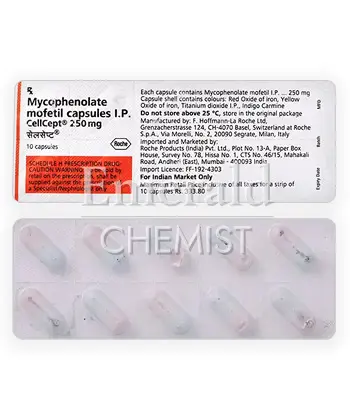
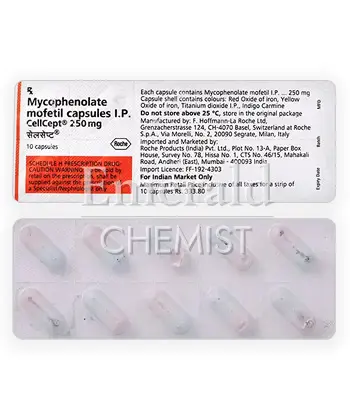
What is Mycophenolate Mofetil and why is it used after transplant? It helps stop your immune system from attacking a newly transplanted organ. It belongs to a class of drugs called immunosuppressants. You take it as tablets or a liquid. It works by blocking an enzyme that helps your body make certain immune cells. This lowers the chance of rejection and protects the transplant.
Your doctor will guide the dose and schedule. Take it exactly as prescribed. Do not change your dose or stop without talking to your clinician. It can be taken with or without food, depending on your plan.
Mycophenolate Mofetil is one of several medicines used to prevent rejection. It may work differently from older drugs. Compared with azathioprine, mycophenolate can be more effective for many people, but it has its own side effects. Compared with calcineurin inhibitors, it is often used together with them rather than alone.
In general, mycophenolate targets immune cells more specifically. This can mean fewer effects on other body parts, but infections and stomach upset still can occur. Your doctor will choose what fits you best.
It is used after kidney, heart, or liver transplant to prevent rejection. It may be used with other medicines to protect the transplant.
In some autoimmune conditions, it can calm overactive immune activity. Your doctor will tailor the plan to you and monitor your response with tests.
Two or three medicines are often used with different goals. Here is a quick look at Mycophenolate Mofetil vs common alternatives.
We provide general differences. Your doctor’s instructions always come first.
| Medication | Common use | Key difference |
|---|---|---|
| Mycophenolate Mofetil | Prevents organ rejection after solid organ transplant | Blocks IMP dehydrogenase in immune cells; often well tolerated but can cause infections and GI symptoms |
| Azathioprine | Immunosuppression for transplant or autoimmune diseases | Older drug; can suppress bone marrow and raise infection risk; different dosing |
| Cyclosporine | Calcineurin inhibitor used with other drugs | Powerful; risks include kidney effects; requires monitoring; different side effects |
Like all medicines, this one has risks. Common problems are stomach upset, diarrhea, and infections. It can lower white blood cells and slow healing. Pregnancy should be avoided while taking this medicine and for a time after. Use effective contraception as advised.
Tell your doctor about other medicines and vaccines. Some drugs and supplements can interact. Regular blood tests help check safety and keep your dose right.
14–21 days. Free from €178.16 .
5–9 days. €26.72
−10% when paying with cryptocurrency.
−10% on all repeat orders.
All orders are packed in neutral, unbranded boxes with no product name on the outside.